
Three key challenges for natural gas distribution
And how electronic volume correctors can help solve them
As the use of natural gas continues to increase, so has utilities’ need for accurate measurement, system reliability and operational safety.
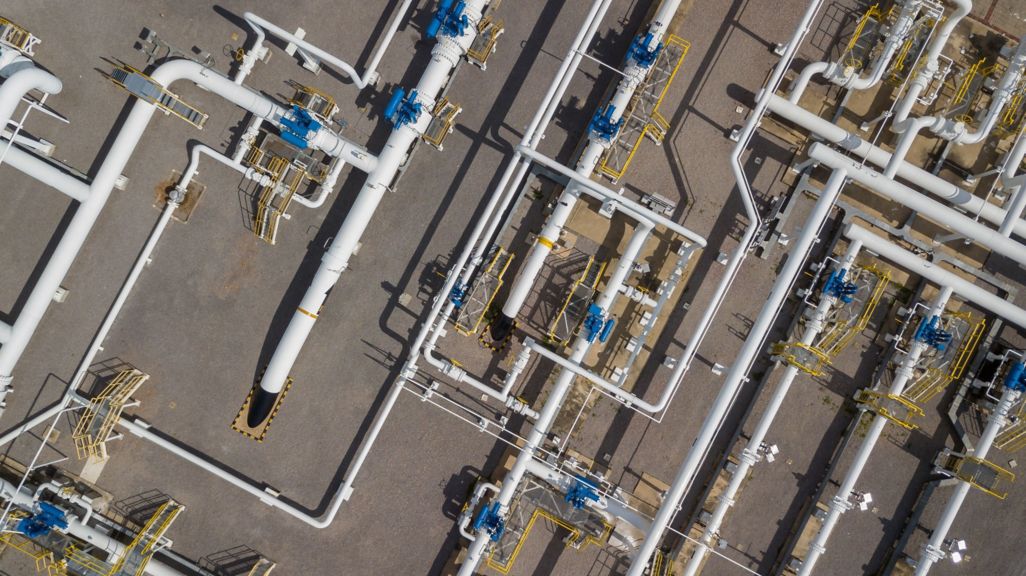
Natural gas is a critical energy source today, used to generate electricity, heat residential and commercial buildings and power industrial processes. Use of natural gas is increasing: consumption grew 2% between 2024 and 2025 in the U.S., averaging 92 billion cubic feet per day, while it increased 2.5% for inland countries in the EU from 2024 to 2025.1,2
In the U.S., more than 1,600 utility companies deliver natural gas to end-users, whether to homes, commercial buildings or industrial plants.3 Local distribution companies use networks of small pipelines to bring natural gas to houses, apartment buildings and commercial facilities, while pipeline companies operate larger networks that transport high volumes of natural gas to industrial facilities. According to the U.S. Energy Information Administration, the average industrial site needs 130 to 140 times more natural gas per year than an individual home.4
Transporting and distributing natural gas to such a wide array of critical infrastructure comes with challenges. It is imperative for utilities to correctly measure the amount of gas reaching each customer so they do not over- or under-bill. There is also growing pressure on utilities to safeguard their data from cyber threats, operate reliably in all weather conditions and validate that their meters are performing as intended.
Here are several pressing challenges for utilities delivering natural gas:
- Extreme weather
Natural gas use often spikes in the coldest months of the year since it is used for space heating. As the gas moves through pipes, it can expand when it is hot and shrink when it’s cold, making it difficult to measure the exact volume being used. This is only exacerbated by extreme heat or extreme cold temperatures.
Electronic volume correctors (EVCs), devices mounted on gas meters to measure site pressure and temperature in real time and convert uncorrected gas volumes, help correct for this shrinking and expansion. They use pressure transducers and temperature sensors to capture gas volume pulses so utilities can have better visibility into actual gas use and can bill customers with greater accuracy.
- The expense of “truck rolls”
Historically, utilities have sent personnel to each of their meters to record their gas volume readings either manually or on a laptop to transmit to a centralized system. This is a time-intensive and costly operating expense.
Increasingly, remote communication in today’s volume correctors can help reduce the need for these routine truck rolls. The devices can be programmed to “wake up” at a certain time (most commonly once per day) and remotely upload information to a host system using encrypted data communication. Utilities can then view the data and determine if technicians need to be sent to any sites to address an urgent issue or make a repair. This can help utilities prioritize where and how to allocate their valuable personnel resources.
- Lost and unaccounted for gas (LUAF)
LUAF is the difference between the volume of natural gas coming into the utility from the pipeline and the volume of gas sold to customers. Gas can escape if a pipe is damaged by a construction crew or if a leak from an aging pipe causes emissions from the delivery system.5 Meters can also drift out of calibration and start giving incorrect measurements.
Utilities are under increased mandates to minimize LUAF and accurately measure gas volumes, which has resulted in greater need for EVCs in the field. Volume correctors incorporate technologies, such as multiple sensors operating simultaneously, to help detect volume pulses and reduce the risk of missed volume input.
Honeywell Technologies’ role
As a sensing and measurement business, Honeywell Technologies has decades of experience assisting utilities with solutions that help bring greater accuracy and reliability to their operations. Our latest electronic volume corrector, the Mercury Instruments EC250 Volume Corrector, is designed to help commercial and industrial operations bill more accurately, simplify field work and gain greater visibility into their operations.
Designed for metering stations and gas distribution networks, the EC250 helps provide continuous insight into rotary meter performance. With remote monitoring capabilities, long battery life and encryption designed to protect critical measurement data, the volume corrector is built to help address the challenges utilities are facing today in natural gas distribution.
To learn more about Honeywell Technologies solutions for the utility industry, from generation and transmission to distribution, visit our website.
1 www.eia.gov/todayinenergy/detail.php?id=67365
2 https://ec.europa.eu/eurostat/statistics-explained/index.php?title=Natural_gas_supply_statistics
3 www.eia.gov/todayinenergy/detail.php?id=64624