
Healthcare facilities must comply with layered federal, state and local codes, with CMS enforcing Conditions of Participation that tie Medicare/Medicaid reimbursement to compliance with NFPA Life Safety Code and Health Care Facilities Code standards.7, 8 Building automation can help residential care facilities meet ANSI/ASHRAE/ASHE Standard 170 requirements (adopted by CMS) for temperature, humidity, pressure differentials, air changes per hour and filtration levels specific to different healthcare spaces. Automated monitoring and documentation systems can also verify that environmental conditions remain within required ranges, generating compliance records that satisfy state survey requirements. Each state may have unique code adoptions and interpretation, making it essential to work with professionals familiar with both federal requirements and local authority having jurisdiction expectations.
Building automation for care facilities
Automated facilities and healthcare building systems can lead to safer, more efficient residential care.


Automated facilities and healthcare building systems can lead to safer, more efficient residential care.
Streamline Residential Care Operations with Integrated Automation
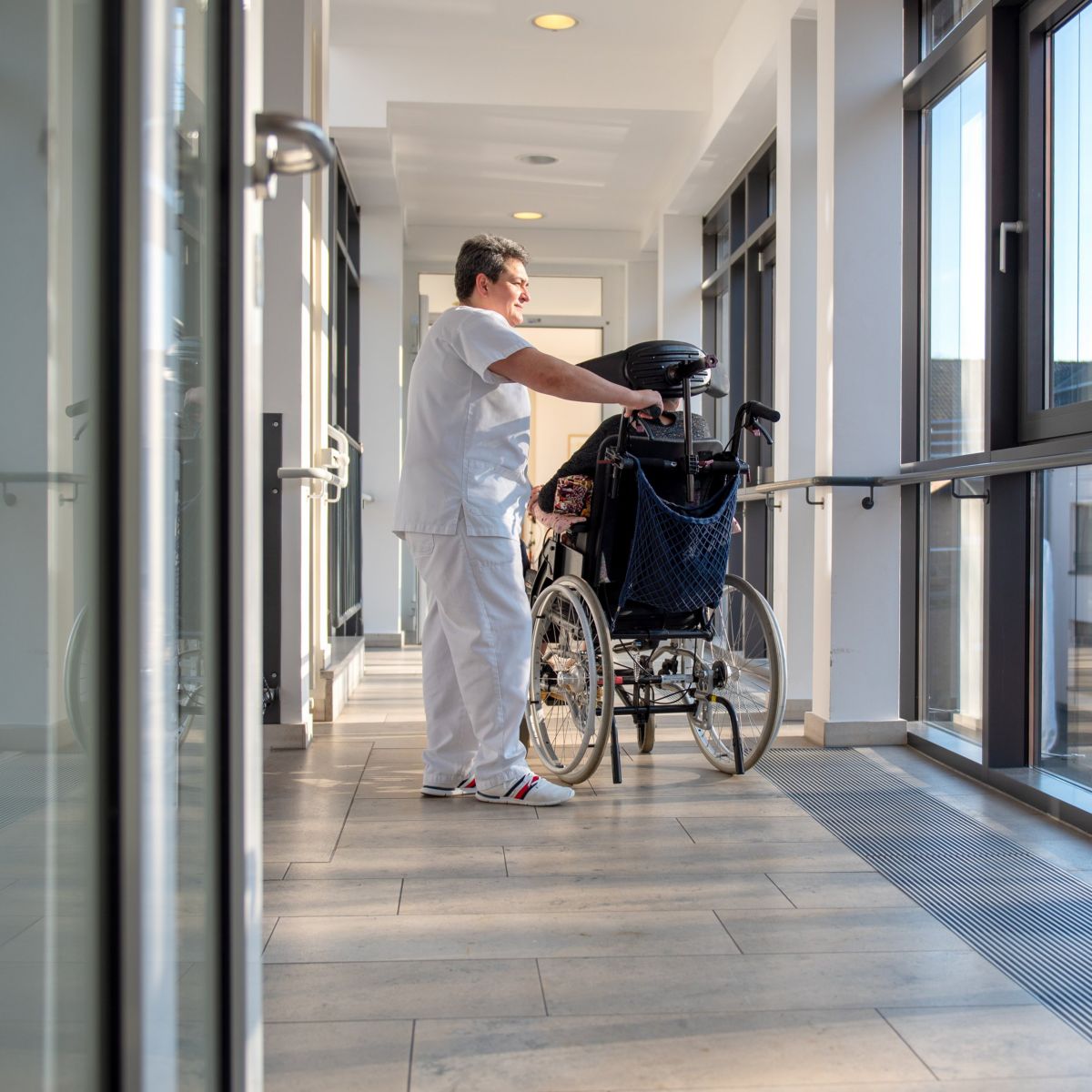
Residential care providers work to provide safe, comfortable environments for vulnerable populations. At the same time, they face the challenges of managing operational costs and regulatory requirements. With over one million Americans living in residential care communities and occupancy reaching record highs, providers need integrated automation to help optimize building performance, support resident wellbeing and improve workforce productivity.1


Frequently Asked Questions About Residential Care Automation
We designed our building automation systems to integrate with existing HVAC, lighting, fire detection, access control, and other building systems through standardized communication protocols and interfaces. Our solutions for healthcare systems support multiple communication protocols including BACnet, Modbus and LonWorks, enabling integration across equipment from different manufacturers. This means healthcare institutions can upgrade their legacy systems incrementally, allowing for staged implementation that minimizes operational disruption. Integration enables centralized oversight while preserving local control capabilities, helping facility staff to manage multiple systems from unified interfaces. Professional assessment helps identify integration opportunities, compatibility requirements and optimal upgrade paths specific to each facility's existing infrastructure.
Building automation systems can deliver strong financial returns for residential care and healthcare facilities, with payback periods ranging from 1 to 7 years depending on facility size and existing infrastructure.9 Government studies show building automation can reduce commercial building energy consumption by approximately 29%, and energy management control improvements show median simple payback times of 1.1 years.10
Sources:
1 https://www.cdc.gov/nchs/products/databriefs/db506.htm
2 https://www.pnnl.gov/main/publications/external/technical_reports/PNNL-31040.pdf
3 https://www.federalregister.gov/documents/2016/05/04/2016-10043/medicare-and-medicaid-programs-fire-safety-requirements-for-certain-health-care-facilities
4 https://www.cdc.gov/nchs/fastats/residential-care-communities.htm
5 https://www.pnnl.gov/main/publications/external/technical_reports/PNNL-31040.pdf
6 https://www.pnnl.gov/sites/default/files/media/file/Impacts%20of%20Commercial%20Building.pdf
7 https://www.cms.gov/medicare/health-safety-standards/certification-compliance/life-safety-code-health-care-facilities-code-requirements
8 https://www.federalregister.gov/documents/2016/05/04/2016-10043/medicare-and-medicaid-programs-fire-safety-requirements-for-certain-health-care-facilities
9 https://www.energy.gov/eere/buildings/articles/report-delves-impacts-commercial-building-controls-energy-savings
10 https://www.energy.gov/eere/buildings/articles/report-delves-impacts-commercial-building-controls-energy-savings
