
Trust, AI and Resilience: Four Perspectives on the Future of Cybersecurity
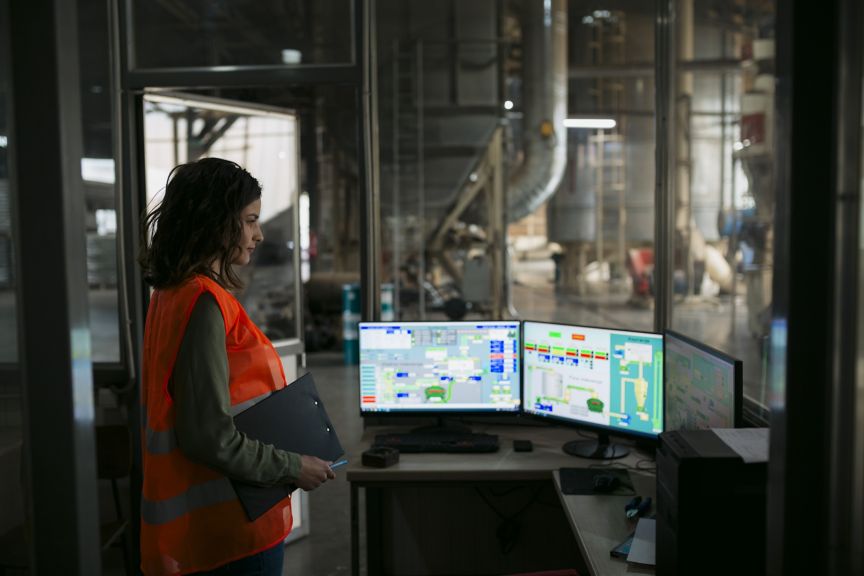
As organizations navigate AI, cloud adoption, industrial connectivity, and increasingly sophisticated threats, cybersecurity professionals are confronting new challenges every day. For Cybersecurity Month, we asked four Honeywell Technologies experts to share their perspectives on the biggest misconceptions, risks, and priorities shaping the future of cybersecurity.
What keeps security leaders up at night?
What do you consider the most significant cyber threat facing organizations today?
Ilkim
Growing complexity. Modern environments are no longer made up of isolated systems, they are interconnected ecosystems of cloud services, third-party providers, industrial assets, AI tools, and countless digital dependencies. As complexity increases, understanding risk, trust relationships, and attack paths becomes significantly more difficult, creating opportunities for attackers to exploit gaps that organizations may not even realize exist.
Mike
The rise of generative and agentic AI and the push to be on the forefront before all the known risks are understood and potential impacts to organizations. Similar threats from attackers using AI as a utility.
Kainat
Despite all the advances in security technology, the weakest link remains the human element. Organizations invest heavily in tools and awareness training, yet many successful attacks still begin with a simple human mistake, whether it's clicking a malicious link, sharing sensitive information, or approving a fraudulent request.
AI is making this challenge even more complex. Not only are attackers using AI to create highly convincing phishing campaigns, deepfakes, and social engineering attacks at scale, but many people are also becoming increasingly comfortable relying on AI-generated recommendations and decisions. There is a growing tendency to trust AI outputs without sufficient validation, which can introduce new risks.
Over the next few years, one of the biggest challenges will be deciding which processes should be automated and which still require human oversight. As AI agents gain the ability to make decisions and take actions independently, organizations will need strong governance, approval workflows, and clear accountability. The future challenge is not just protecting against AI-powered attackers, but ensuring we use AI responsibly without giving up critical human judgment.
Muhammad
The most significant cyber threat facing organizations today is the vulnerability of the IT/OT boundary to automated, state-sponsored ransomware. As industries aggressively connect their factory floor systems to the cloud for better data analytics, that bridge between corporate IT and physical operational technology becomes the primary target for attackers. For a major industrial company, a security breach is no longer just about leaked files or a locked laptop. If a threat actor crosses that IT/OT line, they can compromise critical infrastructure, disrupt entire supply chains, and create serious physical safety hazards. Because malicious actors are now using automated AI tools to scan networks and deploy malware variants at speeds humans cannot match, protecting this boundary is the highest-stakes challenge in the world today. It requires constant, real-time visibility with specialized tools like Cyber Insights to stop threats before they can pivot from a corporate network down onto the industrial floor.
The cybersecurity topic we aren't talking about enough
What cybersecurity topic do you think deserves more attention?
Ilkim
The cybersecurity industry has spent decades perfecting prevention. The next challenge and topic that deserves more attention should be: perfecting resilience. The question should no longer be only whether an incident will occur, but how effectively an organization can continue to operate, adapt, and recover when it does. In my view, resilience will become the defining characteristic of mature cybersecurity programs.
Mike
Probably on individual privacy. As technology, social media, and AI becomes more and more pervasive, how do we maintain individual privacy assurances.
Kainat
I believe security by design deserves far more attention, not just in products, but across every aspect of an organization. Too often, security is viewed as a final checkpoint before release rather than a mindset that should be embedded from the very beginning.
Security should be considered whenever we innovate, design new features, adopt new technologies, build AI capabilities, or create experiences for customers. The most successful organizations are the ones where security is not solely the responsibility of the security team but is integrated into the way engineers, product managers, designers, business leaders, and employees think and make decisions every day.
Muhammad
The topic that deserves far more attention is the rising threat of AI-driven cyberattacks targeting the IT/OT boundary in critical infrastructure. Right now, most conversations about AI security are focused on data privacy or corporate IT leaks. But the real danger is how hackers are using automated AI tools to scan industrial networks, find weaknesses, and launch highly targeted attacks at speeds human analysts simply cannot keep up with. In sectors like energy, we are constantly connecting factory-floor machinery to the cloud for better data analytics. If an AI-powered attack manages to cross that IT/OT bridge, it is not just going to lock up office computers. It can compromise physical operations and create real safety hazards on the plant floor. We desperately need to stop treating AI security as just an IT problem and focus heavily on how to use AI-driven defense tools to protect our physical, industrial infrastructure in real time.
The cybersecurity myth we'd like to leave behind
What is the biggest cybersecurity myth you wish people would stop believing?
Ilkim
One cybersecurity myth I wish people would stop believing, especially in the OT environment, is that isolation automatically equals security. While isolation can reduce exposure, it doesn't eliminate risk. In many cases, poorly understood or poorly managed isolated systems can introduce their own security challenges. Effective cybersecurity is not about disconnecting everything, it's about understanding connectivity, controlling trust boundaries, and managing risk intelligently.
Mike
Probably the cybersecurity movie stereotype of someone breaking into things in 30 seconds from a laptop. It’s a methodical process and threats come from a variety of different sources and areas, not just external.
Some of the simplest weaknesses and mistakes can open doors for attackers, not always complex hacking techniques as it’s portrayed.
Kainat
The biggest myth is that cybersecurity is solely the security team’s responsibility. Security teams can assess, advise, and challenge, but secure products and organizations require shared ownership. Every design decision, software change, identity configuration, data-handling choice, and user action can affect security.
Muhammad
The biggest myth I wish people would stop believing is that because OT networks are not connected to the internet, they are safe from cyberattacks. A lot of people still think industrial plants operate in a completely isolated bubble with zero risk. But the reality is that the air gap is dead. In the modern world, we are constantly connecting factory-floor systems to the cloud for data analytics and remote maintenance, just like the work I have done with AWS platforms. Even if a system is seemingly disconnected, threats still get in through USB drives, vendor laptops, and third-party maintenance links. If you look at famous incidents like Stuxnet, those targeted systems were completely offline, yet they were still breached. Believing that isolation equals security is incredibly dangerous. That is why we must actively monitor live networks with tools like Honeywell Technologies Cyber Insights, rather than just assuming an unplugged cable will keep us safe.
One habit that makes everyone more secure
What is one cybersecurity habit every employee should adopt?
Ilkim
Never assume trust, always verify it. Whether it's an email, a device, a user, or a request, or even an information - a healthy habit of verification is one of the most valuable cybersecurity skills anyone can develop.
Mike
Security should be in the mindset and thought process by every staff member, whether its physical security, checking email, training, or building products. It should be engrained in the through process.
Kainat
Verify before you trust. In the age of AI, phishing emails, fake documents, deepfake voices, and highly personalized scams are becoming increasingly convincing. Before clicking a link, sharing information, approving a request, or acting on something urgent, take a moment to verify the source through a trusted channel. Technology can help, but critical thinking remains one of the strongest defenses against cyber threats.
Muhammad
The single best habit every employee should adopt is practicing extreme caution with third party devices and connections, especially USB drives and external vendor laptops. In the industrial and OT world, we often talk about the danger of phishing emails, but a massive threat to a plant floor comes from physical devices brought into the environment. Employees and external vendors routinely plug USB drives or engineering laptops directly into workstations to transfer files, run maintenance, or update code. Every single employee needs to build the habit of assuming any outside device is potentially compromised. They must strictly follow security screening procedures and use clean, authorized transfer stations before anything touches the local network. In critical infrastructure like oil and gas, a single infected USB can bypass all your perimeter firewalls and hit the plant floor directly, so keeping a sharp eye on physical access is just as important as monitoring the network.
While the technologies and industries may differ, our experts seem to agree that cybersecurity is increasingly about trust, resilience, and people. Whether organizations are navigating AI, cloud ecosystems, critical infrastructure, or privacy concerns, success will depend on building a culture where security is everyone's responsibility.
Learn how Honeywell Technologies helps organizations build more secure, resilient operations.
