
Acceleration in Texas: Data Center Speed Starts Before Construction
Faster paths to commissioning begin with integrated systems, scalable design and procurement flexibility.

Texas continues to attract data center development with its favorable tax incentives, which are projected to increase by 33% over the next five yearsi available land and established industrial infrastructureii. At the same time, continued growth in AI-driven demand may increase pressure to bring data centers online quickly.
But speed to market depends on more than the pace of construction. Equipment availability, system interfaces and commissioning readiness can all become schedule constraints. Developers that treat building controls, fire systems, security and access control as part of the delivery strategy from the start can create a faster, more predictable path to commissioning.
Reduce commissioning delays through early alignment
Rapid commissioning starts with a clear operating model. During schematic design, teams should define how building management, fire, security, operational technology and IT systems will exchange data and respond together. Point lists, alarm priorities, user roles, graphics and acceptance criteria should then remain consistent through drawings, permits, factory testing and site testing.
This front-end coordination can reduce the risk of discovering interface gaps during commissioning, when defects may delay commercial operation, time to revenue and the next phase of development.
Design building and fire systems for growth
Building and fire systems should support the first phase without limiting future expansion. Modular control panels, repeatable device configurations and consistent sequences of operation can simplify testing and make new capacity easier to add.
Advanced fire detection can support identification of developing conditions, while graphical interfaces can help operators interpret system status and identify potential maintenance needs. Considering these factors early in the design process creates a project that is not only ready for launch but also for repeatable growth.
Design for critical infrastructure protection
Scalable security and access control systems should be considered from the beginning of facility design. Role-based permissions, secure interfaces, network segmentation and consistent access policies can help protect critical infrastructure as the site expands.
Before selecting equipment, developers should define access roles, approval requirements and event-logging needs, then test those controls as part of commissioning. This approach can help establish a consistent security baseline while allowing the architecture to support phased expansion and evolving technology requirements.
Build flexibility into procurement
Projects can lose valuable time when waiting on equipment availability. Relying on a single source for critical infrastructure can compound that risk. Developers should evaluate equivalent options, establish appropriate purchasing routes and connect submittals, delivery dates and commissioning dependencies in one standardized workflow.
Having greater procurement flexibility can help reduce constraints, improve visibility across the delivery schedule and support a more repeatable path to commissioning and future data center development.
Start sooner to move faster
For Texas data center developers, acceleration should begin before crews arrive on site. Early coordination across controls, fire, security, IT and operational technology, and support from a scalable architecture and flexible procurement, can help reduce late-stage surprises and create a more predictable route from design to completion.
Ready to build at Texas scale?
Learn how integrated, scalable technologies can support faster delivery and resilient operations in our new Texas-Sized Solutions for Data Centers resource. For help exploring the right approach for your facility or to discuss project requirements, connect with Honeywell Technologies.
-
Operational EfficiencyMore Than Six Decades of Trusted Thermal Sensing: The Honeywell Ongoing Partnership with Boeing
While advances in aviation technology continue to accelerate, one thing remains constant: the need for precise, dependable temperature control throughout an aircraft. For more than six decades, Honeywell has supplied bimetal thermostats and temperature sensing solutions that help monitor temperatures in critical systems.
-
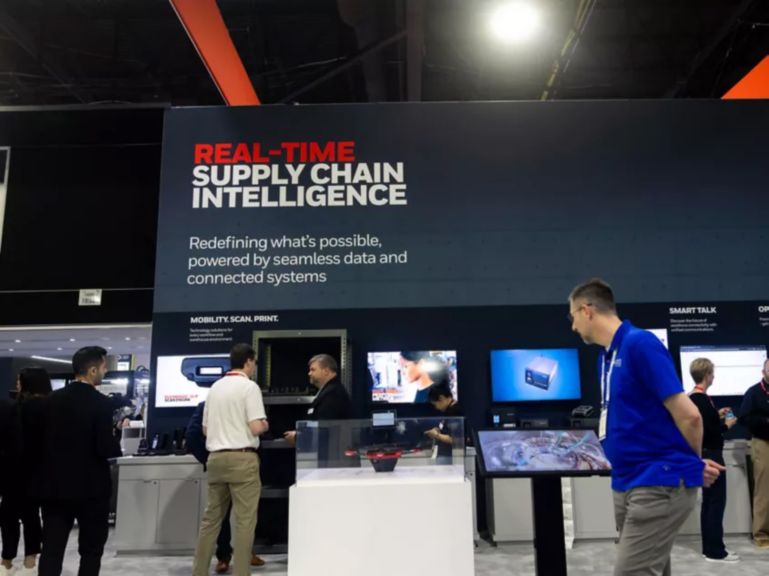
AIHoneywell Productivity Solutions and Services (PSS) MODEX 2026 Recap
Discover key supply chain trends from MODEX 2026, including AI-driven operations, warehouse automation, real-time intelligence, and connected technologies transforming logistics and fulfillment.
-
SafetyEarly Anomaly Detection for Safer Gas Operations
Learn how Honeywell NXU smart gas meters help utilities detect anomalies early, improve field worker safety, reduce leak-related risks, and enable proactive gas network management.
-
 SafetyStreamlining Access Control With Cloud Identity: Why Entra ID Matters | LenelS2
Learn how Microsoft Entra ID integration helps automate onboarding, offboarding, and physical access management for greater security.
- Show More


Footnotes:
i The Texas Tribune, Texas is giving data centers more than $1 billion in tax breaks each year, Paul Cobler, April 8, 2026 [Accessed Aug. 3, 2026]
ii IR Pros, The Texas Advantage: Why Data Centers are Moving to the Lone Star State (And What It Means for Critical Cooling Infrastructure), Nov. 19, 2025 [Accessed Aug. 2026]
