Cultivate a culture of quality: 3 steps to getting started
Cultivating a quality culture requires creating a workplace where everyone prioritizes and values excellence in every aspect of their work. This entails instilling a mindset of excellence throughout the organization, from top to bottom.
Cultivating a quality culture requires creating a workplace where everyone prioritizes and values excellence in every aspect of their work. This entails instilling a mindset of excellence throughout the organization, from top to bottom.
By continually refining processes and systems, companies can strive to achieve the highest levels of quality in all their endeavors. Cultivating a quality culture is critical for any organization’s long-term success, regardless of industry or size.
Let’s talk about why:
- Improved customer satisfaction: A quality culture means employees are committed to delivering products or services that meet or exceed customer expectations. When customers feel that their needs and expectations are being met consistently, they are more likely to remain loyal to the organization and recommend it to others.
- Increased productivity: A quality culture encourages employees to work together to identify and eliminate inefficiencies and waste. Organizations can improve productivity, reduce costs and increase profitability by continuously improving processes and practices.
- Enhanced employee engagement and satisfaction: Employees who work in a quality culture are more engaged and satisfied because they feel their work is meaningful and valued. This can lead to higher retention rates, reduced absenteeism and a more positive work environment.
- Competitive advantage: Organizations prioritizing quality have a competitive advantage in the marketplace. Customers are more likely to choose an organization with a reputation for consistently delivering high-quality products or services.
- Compliance with regulations and standards: A quality culture ensures that organizations comply with applicable regulations and standards. This can help prevent legal and financial penalties and damage to the organization’s reputation.
So how can organizations accomplish this? First, an organization must define what quality means and establish clear goals and metrics to cultivate a quality culture. This includes identifying key performance indicators (KPIs) and measuring progress against them regularly. Additionally, the organization should communicate these quality goals and metrics to all employees and provide regular training on achieving them.
Here’s how.
Step 1: Identify key performance Iindicators
Defining KPIs for a quality culture requires a strategic approach that aligns with the overall business goals and objectives. To define KPIs for quality culture, companies should:
- Define quality objectives
- Identify key metrics
- Set targets
- Monitor and analyze performance
- Focus on continuous improvement
Defining KPIs requires a strategic approach that aligns with the overall business goals and objectives. By following the above steps, organizations can define relevant, measurable and achievable KPIs and monitor and analyze performance regularly to drive continuous improvement.
Step 2: Communicate quality goals and metrics to employees
Effective communication is essential when sharing quality goals and metrics with employees. Here are some of the best methods for communicating quality goals and metrics to employees:
- Hold regular meetings
- Use visual aids
- Provide training
- Use email and other forms of electronic communication
- Celebrate success
Communicating quality goals and metrics to employees is essential for a successful quality culture. By combining regular meetings, visual aids, training, electronic communication and celebrating success, organizations can ensure that their employees are informed, engaged, and motivated to achieve quality goals and metrics.
Step 3: Provide training on achieving quality goals
Training on achieving quality goals is essential to building a quality culture in any organization. Here are some steps to help provide adequate training on achieving quality goals:
- Determine training objectives
- Identify training needs
- Develop a training plan
- Deliver the training
- Evaluate the training
Providing training on achieving quality goals is essential for building a quality culture in any organization. By following the steps outlined above, organizations can develop a comprehensive training program aligned with their quality goals, meets the employees’ training needs and is delivered effectively and engagingly.
Maintaining a strong culture of quality
Organizations must become more agile, adaptable and innovative in their quality management practices by combating disruptors and maintaining a strong culture of quality. This may entail adopting new technologies and approaches, reconsidering traditional quality management systems and developing new capabilities and skills to respond to changing demands. These are just a few steps organizations can take to transform their quality culture.
Recommended for you
-
QMS for Life Sciences - Quality Management
-

QMS Software Patient Safety
-

5 ways technology meets the challenges of complaint handling
-
Quality by Design Article
-
Shaping the Future of Quality RQA
-
Unveiling the Hidden Costs of Recalls in the Life Sciences Industry
-
Sparta Systems and Quartic AI Announce Partnership to Connect Qms to Manufacturing Operations
-
Unlock the Secrets to Streamlined Risk Assessments and Process Improvements
-
ABF-Pharmazie’s Journey with TrackWise Quality Document and Training Management
-
Quality Management New Product
-
Gaining Assurance: A Quality Move
-
Melinda Novatny Integra life Sciences
-
The Evolution of Pharma MES
-
Integrated Risk Management Benefits
-
Get ready for the new european medical device regulation
-
Perform Effective Root Cause Analysis
-
Improving Manufacturing Performance – Moving Beyond OEE to Operational Intelligence
-
What the EU MDR Delay Due to the Coronavirus Pandemic Means for You
-

Alleviate supply chain pressure in the face of a pandemic
-
Root Cause Essentials Continuous Improvement
-
Digital QMS Life Sciences
-
How to build a business case for AI-powered quality
-
How to Choose the Right MES or Manufacturing Operations Platform
-
3 Ways the CAPA Process is Like Preparing for the Big Game
-
Simplify And Standardize the Power of Quality Process Accelerators
-
Virtual Sparta Connection 2020
-
CAPA Management: Technology to the Rescue
-
Legacy Quality Management Systems
-
How to establish supplier qualifications session
-
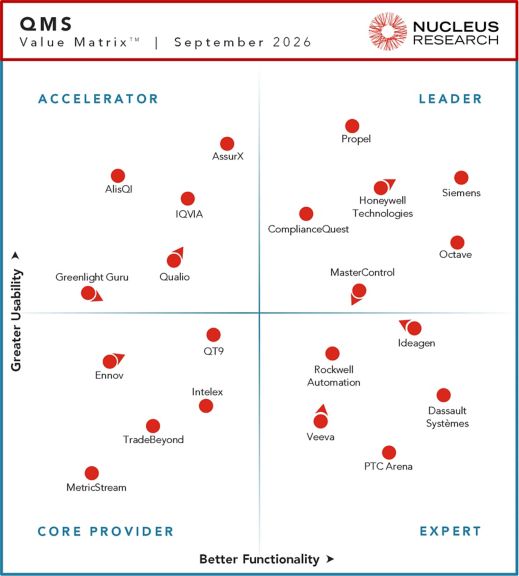
Honeywell Technologies named a leader in 2026 Quality Management System Technology Value Matrix
-
Prevent Quality Failures: The Power of a QMS
-
Managing Quality Within the Medical Device Supply Chain
-
Remote Supplier Audits
-
Five quality processes AI is transforming in Life Sciences
-
Quality Data Business Technology
-
How to build a business case for QMS investment
-
The Role of QMS During a Global Health Crisis
-
Artificial Intelligence (AI) in life sciences quality management: evolution, impact, and future
-
The Key To Moving Beyond Compliance In 2019
-
Voice Of Customer Sheetal Mane Piramal
-
The Benefits of Integrating Enterprise Quality Management
-
Insud Pharma’s Journey with TrackWise Digital: Transforming Global Quality Management
-
Philips Healthcare Quality Transformation with Trackwise
-
Shawn McKinley Senior Analyst Information Systems Cambrex
-
QMS - Effective Implementation of a Quality Management System
-

How to successfully transition to a cloud QMS
-
3 Types of Batch Technologies to Maximize Productivity and Profitability
-
Quality vs Compliance
-
Prioritizing a Stronger OT Cybersecurity Posture in Life Sciences Organizations
-
Root Cause Essentials Unleash the Power of Your Mind with Mind Mapping
-
3 Benefits of a Cloud-Based Quality Management System
-
Supplier Management Experts
-
Measure What Matters
-
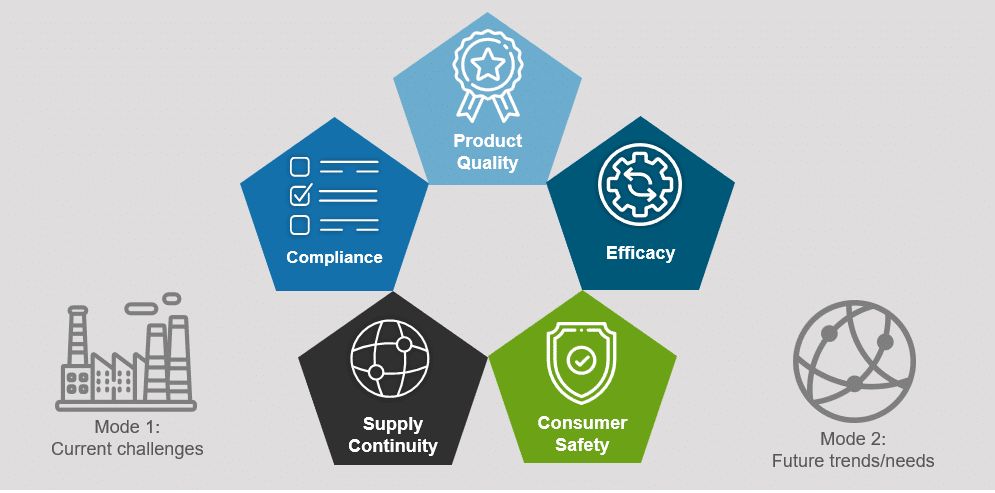
Proactive quality and the bimodal challenge for life science manufacturers
-
How predictive quality is transforming Life Sciences
-
Honeywell Enables Transformation of Life Sciences Manufacturing and Quality Management with TrackWise® Life Sciences Platform
-
Reducing Total Cost of Ownership with an Integrated Pharma Manufacturing Platform
-
Post Market Surveillance Udi Compliance for Class I Devices Moves Forward with New Deadline
-
Why connected data is the foundation for AI in quality management
-
An overview of AI in key quality management processes
-

Expansion Of The Data Integrity Body Of Knowledge
-
A practical roadmap to connected quality in Life Sciences
-
QMS - How Does a QMS Work? Understanding the Core Principles and Functionality
-
7 Must-have quality KPIs
-
Document Management: Communication with Regulators
-
Take the fear out of change with an automated change management process
-
Quality Challenges Facing the Medical Device Industry
-
Document Management Systems: Risks and Solutions
-
Quality Management as a Strategic Technology Partner
-
Digital Audit Management Software
-
QMSR Medical Devices
-
Flipping CAPA on its Head with Prevention and Understanding the True Root Cause
-
Trackwise Digital Video Testimonial From Celonic
-

5 functions that elevate your QMS
-
QMS - Exploring the Key Components of a Quality Management System
-
Why Is a QMS Important
-
Sparta Experts RQA 2021
-
How to meet changing objectives update your quality plan
-
Where Are You on the Quality Management Maturity Spectrum
-
Life Sciences Quality Trends
-
ISO 9001 QMS
-
Integrated Document Management: Leveraging Technology
-
The Patient Centric Passion Behind Sparta Meet Dr Oxana K Pickeral pH D MBA President and CEO of Sparta Systems
-
Why faster decisions have become a competitive advantage in life sciences manufacturing
-
Sparta Systems User Groups
-
Paving the Way to Proactive Quality Tips for a Successful Journey
-
Medical Device Supplier Quality
-
Hidden costs of disconnected quality systems in Life Sciences
-
Five common misconceptions about Quality 4.0
-
The Quality 4.0 Productivity Paradox
-
Voice of Customer Rahul Songire Senior General Manager Cqa Digital Transformation Journey With Trackwise Qms
-
Trackwise Digital Document Control Software
-
Three ways to assess your quality maturity
-
Finalized: EU Publishes GMP Annex 1 Revision
-
Digital CAPA Management Software
-
Quality Best Practices Council
-
From Data to Knowledge: Building Workforce Intelligence in Pharma Manufacturing
-
Document Management a Tale of Two Manufacturers
-
QMS - The Elements of a Successful CAPA Process
-
Olympus Quality Transformation Journey
-
Qms Software Supply Chain
-
Gamp-5-second-edition
-
Voice Of Customer Suruchi Sharma Abbott
-
The Honeywell Life Sciences Applications Suite Leverages the Power of AWS Cloud to Accelerate Innovation
-
Selecting the Right QMS
-
What is MES in pharma manufacturing? A practical guide
-
Digital QMS Value
-
Voice Of Customer Srinivas Hosadurga Cipla TrackWise
-
Uncovering The Root Cause And Overcoming Challenges Along The Way
-
Mastering Modern Recall Management a 6 Part Journey to Excellence
-
Is your quality management decision-making impaired by unreliable data?
-
Strike the right balance between compliance and quality
-

QMS - Unlocking the value: Benefits of implementing a quality management system (QMS)
-
Three Reasons to Take Your Document Management Digital
-
The Power of Integration a Holistic Approach To Quality and Document Management
-
QMS Change Management During the Time of Coronavirus
-
TrackWise Digital Success Series
-
Protect Your Product from the Risks of Supply Chain Complexity
-
Reflecting on World Quality Week
-
DMS Integrated Quality Management
-
Measuring the Success of a QMS
-
Accelerating time-to-market in life sciences manufacturing
-

6 Signs of a flawed risk management process
-
Revolutionizing Quality Management Review From Compliance Task to Strategic Insight
-
Proactive Quality Management in 2020
-
The Elements of a Successful CAPA Process
-
Manufacturing Excellence Platform: An Advanced MES Solution
-
Pharmaceutical Quality Digital QMS
-
How Industry 4.0 is Revolutionizing Life Sciences Workforce Solutions
-
3 Ways Digitalization Can Improve Operational Efficiency in Life Sciences Manufacturing
-
4 Strategies to Transform Life Sciences Manufacturing Workforce
-
Five Reasons OT Cybersecurity Must be an Immediate Priority in Life Sciences
-
5 Ways Technology is Rewriting the Workforce Playbook in Life Sciences
-
Hidden Quality Costs in Life Sciences Manufacturing | Honeywell Technologies